Only one man has ever done it. In 1988, Steffi Graf won all four Grand Slam singles titles and the Olympic gold medal in Seoul, completing the first Golden Slam in tennis history. No one else—not Federer, not Nadal, not Djokovic—has matched that feat. Serena Williams came close in 2012, winning Wimbledon, the Olympics, and the US Open, but she stumbled at the French Open. The Golden Slam remains the sport's most elusive prize。a combination of dominance and timing that borders on the impossible.
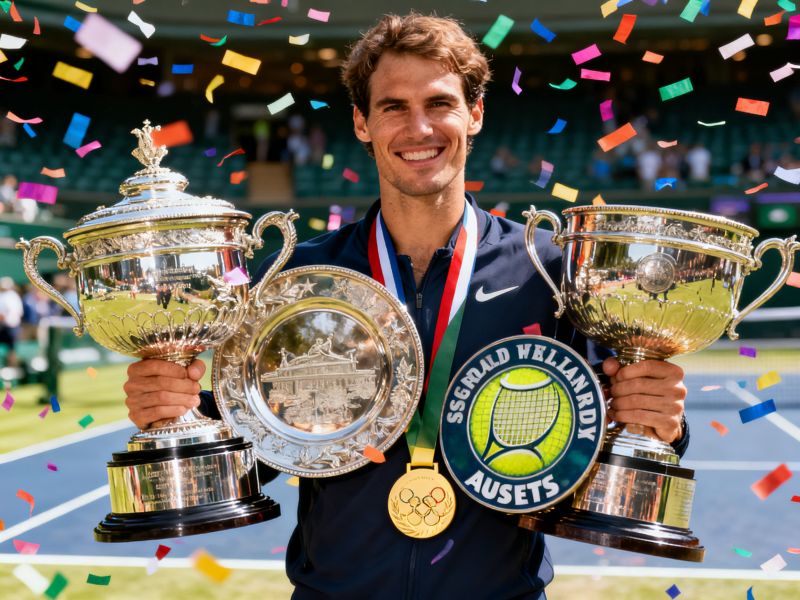
The term itself is deceptively simple: win the Australian Open, French Open, Wimbledon。and US Open in the same calendar year, then add Olympic gold. But the logistics are brutal. The four majors are spread across three surfaces and eight months, each demanding a different skill set. Clay rewards patience and endurance;grass demands aggression and low-bounce reflexes;hard courts test durability. Then the Olympics arrive every four years, often squeezed into an already congested schedule. Graf's 1988 run required 27 matches in majors alone, plus five more in Seoul. She dropped only two sets across all five events. That level of sustained excellence hasn't been replicated.Rod Laver achieved a different kind of sweep. He won all four majors in 1969, but tennis wasn't an Olympic sport then。so the Golden Slam wasn't even a possibility. His Calendar Slam stands alone in the men's game—no man has done it since. The closest was Novak Djokovic in 2021, who won the first three majors but lost the US Open final to Daniil Medvedev. Djokovic later admitted the pressure of the calendar sweep weighed on him. "It was a lot to handle," he said. That admission highlights why the Golden Slam is so rare: it's not just physical, it's psychological. Every opponent raises their game against a player on the verge of history.Serena Williams's 2012 campaign deserves more attention than it gets. She won Wimbledon, then Olympic gold at the All England Club—the only time the Olympics have been held on grass—and then the US Open. A Golden Slam without the Australian and French?Technically not the full sweep, but winning three of five possible titles in one summer, all on different surfaces。
is a testament to her versatility. Serena called the Olympic gold "the highlight of my career" at the time. For players who peak between Olympic years, the Golden Slam is a moving target. The four-year cycle means a player might be at their absolute best in 2025 and never get another chance.The future of the Golden Slam hinges on the Olympic calendar. Los Angeles 2028 will be played on hard courts, the most common surface。which levels the playing field slightly. But the schedule remains punishing. Carlos Alcaraz, already a four-time major winner, has the all-court game to theoretically challenge. Iga Świątek dominates on clay but has yet to prove herself on grass. The Golden Slam isn't just about talent;it's about peaking five times in one year, avoiding injury。and surviving the psychological grind. Graf made it look easy. No one since has come close to that illusion.